By: Tunji Okunlola
Nigeria’s outstanding syndicated loans climbed by $2.73bn over a single year, an increase of more than 21 times, as the Federal Government leaned more heavily on commercial financing to fund infrastructure projects, according to an analysis of Debt Management Office figures by ClarityNewsNg.
The loan stock grew from $133.66m in March 2025 to $2.86bn by March 2026 in a jump of roughly 2,041 per cent in twelve months. That surge also reshaped the makeup of the country’s external debt profile, with syndicated loans climbing from a mere 0.29 per cent of total external debt to 5.51 per cent over the same period.
The development comes against a backdrop of mounting unease over Nigeria’s expanding debt load and the servicing costs that come with it, as the government turns increasingly to commercial lenders to bankroll infrastructure.
DMO figures put Nigeria’s external debt at $45.98bn as of March 31, 2025, split between $22.43bn in multilateral loans, $6.03bn in bilateral debt and $17.51bn in commercial obligations. Within that commercial category sat $17.32bn in Eurobonds, $133.66m in syndicated loans and $54.36m owed to Deutsche Bank meaning syndicated loans made up just 0.29 per cent of total external debt at that point.
That picture shifted considerably by year-end. December data showed $2.51bn recorded under “Syndicated Loans (Projects),” plus $4.63m owed to Standard Chartered Bank and $159.97m to UniCredit SPA bringing identifiable syndicated facilities to roughly $2.68bn, not counting the separately listed $56.09m Deutsche Bank facility. That total equated to about 5.16 per cent of Nigeria’s $51.86bn external debt at the close of 2025, up sharply from 0.29 per cent nine months prior.
The exposure grew further still in the first quarter of 2026. Rather than grouping the loans under a single project category as in December, the March 2026 DMO report broke out four separate creditors under a new “Syndications” heading: First Abu Dhabi Bank with the largest share at $1.87bn, the African Export-Import Bank at $637.82m, UniCredit SPA at $319.27m, and Standard Chartered Bank PLC at $30.51m. Combined, these four facilities totaled $2.86bn which is about 5.51 per cent of Nigeria’s $51.90bn external debt. Deutsche Bank’s $52.11m exposure was reported separately.
In other words, while Nigeria’s overall external debt rose roughly 12.9 per cent, from $45.98bn to $51.90bn, over the year, its syndicated loan exposure ballooned by more than 2,000 per cent. The $2.73bn rise in syndicated facilities accounted for close to 46 per cent of the total $5.93bn increase in external debt during the period.
Syndicated loans work by pooling several financial institutions together to finance a single borrower, spreading both the funding and the risk among participating lenders. They’re typically used for deals too large for any one lender to handle alone, giving governments and corporations access to substantial capital for major projects.
Nigeria’s growing reliance on this kind of financing tracks closely with the Lagos-Calabar Coastal Highway project. In July 2025, the government locked in a $747m syndicated loan for the first phase’s initial section; a 47.47-kilometre stretch running from Victoria Island to Eleko Village in Lagos, which officials described as the largest syndicated road financing deal of its kind in the country’s history.
Deutsche Bank served as global coordinator, initial mandated lead arranger and bookrunner on that deal, with First Abu Dhabi Bank, Afreximbank, the Abu Dhabi Exports Office, ECOWAS Bank for Investment and Development, Nexent Bank and Zenith Bank also taking part. The Islamic Corporation for the Insurance of Investment and Export Credit supplied partial coverage against political and commercial risk.
The former Finance Minister Wale Edun said at the time that the deal signaled renewed global confidence in Nigeria’s economy. “This deal reflects the success of our macroeconomic reforms and the return of international capital to support Nigeria’s development. We are focused on financing infrastructure in ways that are sustainable, transparent, and catalytic and this transaction is a model of that vision in action,” he said.
Works Minister David Umahi echoed that sentiment, calling the financing arrangement further validation of the administration’s economic reforms: “This transaction is a vote of confidence in Nigeria’s economic reform agenda.”
A second major facility followed in December 2025, when the government closed a $1.126bn deal covering the highway’s second section of about 55.7 kilometres stretching from Eleko to Ode-Omi. That facility was fully underwritten by First Abu Dhabi Bank and Afreximbank, contributing $626m and $500m respectively, with ICIEC again providing partial risk cover. Combined, the two highway sections have now attracted $1.873bn in financing.
The growing debt load adds further strain at a time when servicing costs already consume a substantial share of public resources. It was previously reported that Nigeria spent about $5.21bn servicing external debt in 2025; more than 72 per cent of the country’s total international payments for the year quoting Central Bank of Nigeria data.
CBN figures show external debt servicing costs rose from $4.66bn in 2024 to $5.21bn in 2025, an increase of $551.86m, or roughly 11.9 per cent year-on-year.
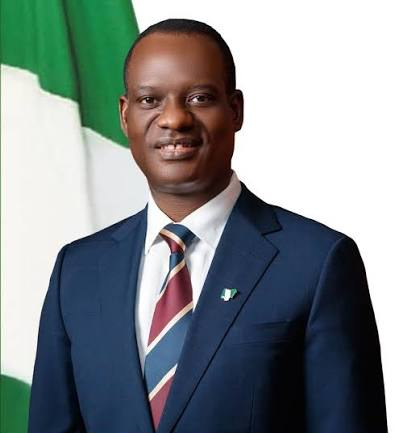
Meanwhile, Finance Minister and Coordinating Minister of the Economy Taiwo Oyedele has pushed back against critics who question the scale of government borrowing without weighing its purpose or expected payoff. Speaking in Abuja at the Fellowship Award Ceremony and 2nd Biennial Conference of the Capital Market Academics of Nigeria, he said: “When analysts go on TV and join the populist view to accuse the government of borrowing, you are doing a disservice. The relevant question is never simply how much debt. It is always debt for what and at what cost, against what return, and repaid on what terms. A nation, a state, or a business that borrows to finance a productive asset generating returns above the cost of that capital is not behaving recklessly; it is behaving rationally.”
Discover more from CLARITYNEWSNG
Subscribe to get the latest posts sent to your email.