
By: Ganiyu Olayinka
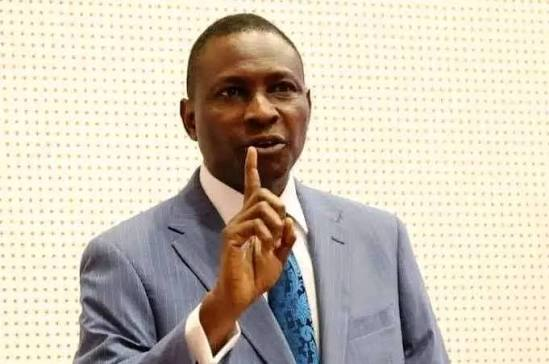
On assuming office nearly three years ago, the Executive Chairman of the Economic and Financial Crimes Commission (EFCC), Olanipekun Olukoyede, promised to do things differently. He assured Nigerians of his readiness to fight financial crimes and other forms of fraud without fear or favour.
About 34 months into his tenure, Olukoyede says he has remained focused on the commission’s mandate, even as more work lies ahead.
That commitment, he said, has culminated in the recovery of a staggering N1.233 trillion in proceeds of fraud and other criminal activities.
Asset recovery has been one of the major pillars of his stewardship. Olukoyede disclosed that between October 1, 2023, and June 30, 2026, the commission also recovered $684,478,457.32, £373,905.78 and €9,343,803.66, in addition to recoveries in other currencies.
He made the disclosure at a media forum earlier in the week where he presented an account of his stewardship.
The EFCC chairman said he assumed office with a clear commitment to reposition the commission and that, through sustained enforcement, institutional reforms and stronger collaboration with partners within and outside Nigeria, the agency had continued to make progress.
According to him, the gains recorded have contributed to economic growth, helped rebuild Nigeria’s international image and supported efforts to optimise foreign direct investment.
“Today, I want to place before Nigerians the measurable outcomes of that work, what those outcomes mean for our economy and financial system, and the direction in which the Commission is moving,” he said.
10,872 convictions in 34 months
Olukoyede disclosed that between October 2023 and July 2026, the commission received 49,673 petitions, investigated 39,615 cases, filed 14,476 cases in court and secured 10,872 convictions.
This translates to a conviction-to-filing ratio of 75.1 per cent.
In the first quarter of 2026 alone, the EFCC recorded 1,370 convictions, a development the chairman described against the backdrop of what he said was a troubling rise in financial and economic crimes.
“These results reflect diligence, resilience and a prosecutorial approach anchored on evidence and courtroom outcomes,” he said.
More concerning, however, is the changing pattern of financial crimes in the country.
According to the commission, analysis of petitions and cases indicates a significant increase in advance-fee fraud, popularly known as 419, and cybercrime. Together, the two categories accounted for nearly two-thirds of recorded offences.
“Our 2024 to 2026 year-to-date category data recorded 46,288 offences across nine major typologies. Advance-fee fraud and cybercrime together represented nearly two-thirds of recorded offences,” Olukoyede said.
He added that between 2024 and 2025, total recorded offences increased by 24.1 per cent, with notable rises in procurement fraud, bank fraud, cybercrime and economic-governance offences.
The figures, according to the commission, demonstrate that the fight against economic and financial crime is no longer limited to traditional corruption and grand corruption but increasingly involves sophisticated cyber-enabled offences.
Olukoyede expressed concern over the growing threat posed by cybercriminals, warning that a financial institution could be brought down within minutes if adequate safeguards were not put in place.
“Every day, we are protecting citizens, businesses and institutions from fraud, cyber-enabled crime and other forms of economic exploitation,” he said.
No sacred cows
Under what he described as “accountability without status exception”, Olukoyede said the era of sacred cows was over, stressing that the commission would continue to pursue complex and high-profile cases irrespective of the status of those involved.
Those investigated and prosecuted under his administration, he said, include former governors, ministers and other public office holders, heads of government agencies, financial-sector operators and corporate executives.
The commission recently secured convictions against several high-profile Nigerians, including former Minister of Power, Saleh Mamman, who was sentenced to 75 years’ imprisonment over a N33.8 million fraud case; former Managing Director and Chief Executive Officer of the Nigerian Export-Import Bank, Robert Orya, who was sentenced to 490 years over a N2.4 billion fraud case; and former Acting Accountant-General of the Federation, Chukwunyere Nwabuoku, who was sentenced to 72 years for money laundering.
“The principle is simple – no office or title places anyone beyond the reach of the law. We will continue to investigate professionally, prosecute on the strength of evidence and allow the courts to determine guilt or innocence,” Olukoyede said.
Money laundering, illegal mining and virtual assets
The commission said it recorded 920 cases involving money laundering, unlicensed bureaux de change, illegal mining, virtual assets and terrorist financing, securing 212 convictions.
Money laundering and unlicensed bureaux de change cases accounted for the largest share of this portfolio.
Of the N1.233 trillion recovered in naira, approximately N397.26 billion, representing 33 per cent, constituted direct recoveries for the Federal Government.
The remaining N836.34 billion, or 67 per cent, represented indirect recoveries made on behalf of ministries, departments and agencies, state revenue services, companies, individuals and foreign victims.
For Olukoyede, however, recovery is meaningful only when the proceeds are not re-looted but deployed to critical sectors of the economy or returned to their rightful beneficiaries.
From recovered assets to public benefit
In August 2024, the Federal Government directed that N50 billion each be allocated from EFCC recoveries to the Nigerian Education Loan Fund (NELFUND) and the Nigerian Consumer Credit Corporation.
A further N50 billion each was subsequently approved for NELFUND and the Credit Corporation in 2026, according to the commission.
One of the most notable examples of asset recovery being converted into public infrastructure is the former NOK University, which was forfeited and subsequently converted into the Federal University of Applied Sciences, Kachia, Kaduna State.
The university matriculated 1,909 students in December 2025.
“These are students who ordinarily would not have been afforded the opportunity of tertiary education. We can also imagine the impact of the institution on the local economy of Southern Kaduna,” Olukoyede said.
He added that another private university of significant value had also been finally forfeited to the Federal Government.
The commission said N661.32 billion and $492.37 million were released to beneficiaries during the period under review. About N325.35 billion was paid directly to individuals and corporate bodies, while N335.97 billion was released to ministries, departments and agencies, the Nigerian Revenue Service, state internal revenue services and other public institutions, companies and individuals.
“When recovered criminal value helps finance education and household credit, enforcement moves beyond punishment to restoration and productive national use,” Olukoyede said.
Recovering government revenue
The EFCC chairman also highlighted the commission’s contribution to revenue mobilisation.
He said federal and state tax recoveries amounted to approximately N288.1 billion during the period, comprising about N173.2 billion in federal tax recoveries and N114.9 billion attributed to state internal revenue services.
“This is fiscal value recovered through enforcement of existing obligations, not through the imposition of new taxes,” he said.
In addition, approximately N257.2 billion in naira recoveries were recorded for federal ministries, departments and agencies.
For Olukoyede, the figures demonstrate that anti-corruption enforcement can restore fiscal space, strengthen federal and sub-national revenue and return working capital to institutions, companies and citizens.
Beyond its deterrent effect, he argued, every recovery, prosecution and conviction also supports financial-market integrity, protects the extractive and digital economies and strengthens Nigeria’s international credibility.
10,053 assets forfeited
The EFCC’s achievements, according to the chairman, extend beyond cash recoveries.
Between October 2023 and July 2026, the commission secured the forfeiture of 10,053 tangible assets under interim and final court orders.
These included 8,198 electronic items, 1,177 real-estate assets, 370 automobiles and 251 plots of land, as well as schools, factories, hotels, shops, oil rigs, barges, 102 tonnes of solid minerals, machinery and aircraft.
Proceeds from the disposal of assets under final forfeiture orders amounted to approximately N12.07 billion and were paid to the Federal Government.
Nigeria exits FATF grey list
Another milestone highlighted by Olukoyede was Nigeria’s removal from the Financial Action Task Force (FATF) grey list in October 2025.
He attributed part of the progress to sustained enforcement in money laundering, terrorist financing, asset freezing and confiscation, virtual assets and other high-risk sectors.
“Sustained enforcement in money laundering, terrorist financing, asset freezing and confiscation, virtual assets and other higher-risk sectors formed part of Nigeria’s wider national effort to address deficiencies in the anti-money laundering and counter-financing of terrorism framework,” he said.
The commission also said its enforcement against unlicensed bureaux de change complemented regulatory reforms by the Central Bank of Nigeria.
It recorded 234 BDC-related cases and secured 73 convictions within the three-year period.
“The overarching objective is to support a more formal, transparent and compliant retail foreign-exchange market and close channels vulnerable to illicit finance, speculation and round-tripping,” Olukoyede said.
International cooperation
The EFCC chairman acknowledged that many of the milestones would not have been possible without the support of domestic and international partners.
He noted that organised crime is becoming increasingly sophisticated and operates across borders and jurisdictions, making international law-enforcement cooperation essential.
“At the EFCC, collaboration is central to our mandate. Domestically, we work with law-enforcement agencies, regulators, the judiciary, ministries, departments and agencies, and state revenue authorities,” he said.
Internationally, he listed partners including the Federal Bureau of Investigation, the United Kingdom’s National Crime Agency, the Royal Canadian Mounted Police, INTERPOL and other national and international law-enforcement agencies.
Institutional reforms
The commission also credited its progress to reforms and restructuring carried out internally.
These include new guidelines on arrest and bail, a review of sting operations, the establishment of the Department of Fraud Risk Assessment and Control, the Security Department, the Immigration and Visa Section and the Cybercrime Rapid Response Centre.
The commissioning of the Enugu and Ilorin directorates, as well as the establishment of new directorates in Ekiti, Anambra and Katsina states, was also aimed at improving citizens’ access to the commission.
The EFCC said it had introduced policies covering gifts and hospitality, conflict of interest and exhibit-room security.
The Internal Affairs Department was also renamed and restructured as the Ethics and Integrity Department, reflecting what the chairman described as the commission’s commitment to internal cleansing.
At the same time, the agency is investing in digital transformation.
“Currently, almost 60 per cent of our processes and operations have been digitalised with sustained investment in innovation,” Olukoyede said.
Beyond arrests and recoveries
For the EFCC chairman, the success of his tenure cannot be measured solely by the number of arrests made, cases filed, assets recovered or convictions secured.
His broader responsibility, he said, is to ensure that intelligence translates into prevention, petitions into investigations and investigations into prosecutions.
While expressing satisfaction with the commission’s performance, Olukoyede acknowledged that much more remained to be done.
He said the next phase would focus on deepening prevention, ensuring faster restitution, investing in better investigative technology and improving professionalism in the commission’s engagement with citizens.
“We will intensify the fight against corruption and economic crime with respect for due process and unrelenting focus on measurable value for the public,” he said.
Discover more from CLARITYNEWSNG
Subscribe to get the latest posts sent to your email.