The Federal Government says the Fund’s 2026 Article IV assessment independently confirms that two-and-a-half years of difficult structural reforms are paying off – even as poverty and food insecurity remain pressing concerns
By: Ganiyu Olayinka
The Federal Government has welcomed the International Monetary Fund’s 2026 Article IV Mission Concluding Statement on Nigeria, describing it as independent validation that the sweeping economic reforms launched under President Bola Ahmed Tinubu are bearing fruit. The statement, released Tuesday, highlights improvements in foreign exchange market functioning, stronger external buffers, banking sector resilience, and growing macroeconomic stability.
The IMF found that reforms implemented over the past two and a half years have yielded improved macroeconomic outcomes and enhanced Nigeria’s resilience to external shocks. The Fund specifically credited the decisions to end fuel subsidies, eliminate deficit monetisation, liberalise the foreign exchange market, and tighten fiscal discipline with reducing vulnerabilities and rebuilding investor confidence.
“Nigeria now faces global shocks with stronger policy frameworks and buffers than before.”
-IMF 2026 Article IV Mission Concluding Statement
Tensions in the Middle East have complicated the global outlook, pushing up energy prices, raising food costs, and tightening financial conditions worldwide. The government noted that despite these headwinds, Nigeria’s foreign exchange parallel market premium has remained below five percent, sovereign spreads have stayed broadly stable, and investor confidence has been preserved. Abuja also flagged that Nigeria stands to benefit from elevated energy prices through stronger export earnings and increased foreign exchange inflows.
Social & Structural Agenda
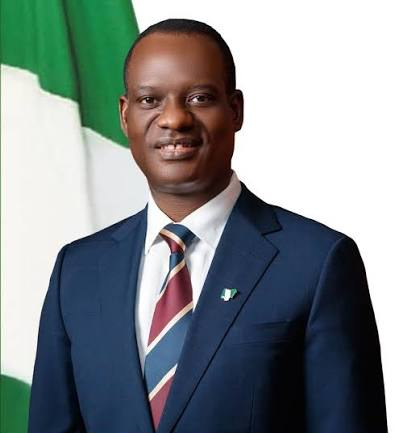
Finance Minister Taiwo Oyedele acknowledged the IMF’s observation that poverty and food insecurity remain significant challenges, even as per capita income grew by nearly ten percent in 2025. The government said macroeconomic stability, while necessary, is not sufficient on its own, and outlined ongoing social protection measures including direct cash transfers to vulnerable households, student financing through the Nigerian Education Loan Fund (NELFUND), consumer credit initiatives, and healthcare investments.
On agriculture, the government said it is scaling up the Renewed Hope National Agricultural Mechanisation Programme and related initiatives to boost productivity, expand irrigation and dry-season farming, and improve food security — with a view to moderating food inflation while creating jobs and raising rural incomes.
Fiscal & Debt Outlook
The IMF projected continued economic growth above four percent over the medium term, alongside improving external reserves, rising investment, and strengthening fiscal revenues. Public debt has already declined relative to GDP and reserve buffers have strengthened, developments the government said complement recent sovereign credit rating upgrades from leading international agencies.
Abuja also said it is taking steps to address IMF recommendations on fiscal reporting, budget transparency, and data reconciliation – including improving coordination among institutions and digitising revenue collection processes.
Key Reform Milestones Cited
- Removal of long-standing fuel subsidies, eliminating a major fiscal drain
- Liberalisation of the foreign exchange market, narrowing the parallel market premium to under 5%
- Elimination of deficit monetisation and tightened fiscal discipline
- Implementation of new tax laws and digitisation of revenue collection
- Strengthened banking sector resilience confirmed by IMF assessment
- Public debt declining as a share of GDP; external reserves significantly improved
The minister concluded that while challenges remain, “the direction is clear and the foundations are stronger,” with the ultimate objective being lower inflation, decent jobs, higher incomes, and a better quality of life for every Nigerian.
Source: Official press release issued by Taiwo Oyedele, Honourable Minister of Finance and Coordinating Minister of the Economy, Federal Republic of Nigeria. Abuja, 9 June 2026.
#Nigeria #IMF #HMFCE #President Bola Tinubu #Taiwo Oyedele
Discover more from CLARITYNEWSNG
Subscribe to get the latest posts sent to your email.