By: Tunji Okunlola
The Federal Government could spend close to N2 trillion subsidising electricity this year as it holds firm on its decision not to raise tariffs in the near term.
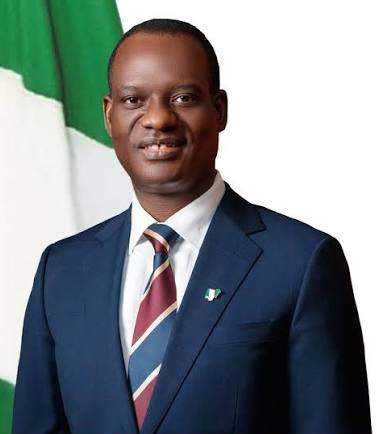
Minister of Power, Joseph Tegbe, laid out the government’s position at a media parley in Abuja on Monday, held to mark his first 100 days in office. “There are no immediate plans to increase electricity tariffs. Our goal is to build a commercially viable power sector while protecting vulnerable consumers,” he said.
His comments follow the Nigerian Electricity Regulatory Commission’s disclosure, in its 2025 Annual Report, that the Federal Government incurred an electricity subsidy of N1.93 trillion in 2025. NERC said this figure amounted to 57.44% of the total invoice from the Nigerian Bulk Electricity Trading company for the year, averaging N160.69 billion a month.
According to the commission, the subsidy arose because approved electricity tariffs remained below cost-reflective levels, with government stepping in to cover the shortfall. “In the absence of cost-reflective tariffs, the government undertakes to cover the resultant gap (between the cost-reflective and allowed tariff) in the form of tariff subsidies,” NERC said, adding: “It is important to note that due to the absence of cost-reflective tariffs across all DisCos, the government incurred a subsidy obligation of N1.93tn (57.44 per cent of total NBET invoice) during the year.”
With the tariff freeze holding, the subsidy bill is likely to stay near the N2 trillion mark again this year; a level it also approached in 2024 and 2025 despite the introduction of the Band A–E tariff structure in 2024. Only Band A customers currently pay the full cost of their electricity; all other bands continue to benefit from government subsidies now nearing N2 trillion.
The tariff freeze comes as power generation companies raise doubts about the effectiveness of the Federal Government’s N4 trillion Presidential Power Sector Debt Reduction Programme, warning that fresh liabilities estimated at more than N7 trillion could pile up before the programme is even fully rolled out.
The Association of Power Generation Companies (APGC) said it does not oppose the government’s plan to raise bonds to clear outstanding obligations, but argued the move won’t resolve the sector’s underlying liquidity crisis, since debts keep accumulating every month. APGC Chief Executive Joy Ogaji put it this way: “Every month, the DisCos are not paying 100 per cent. NBET is not paying 100 per cent. The N4tn legacy debt is until December 2024. So, how about the accumulation for 2025? And what is already accumulated for 2026? So by the time you finish issuing this N4tn bond over seven years, by 2033, two times what you’re going to pay would have accumulated. So what is your plan?”
Ogaji also pressed the government to take a more sustainable approach to subsidies, arguing that the current arrangement exists mostly on paper because there’s no matching budget allocation behind it. “One of the sustainable ways is for the Federal Government to acknowledge the fact that they cannot subsidise the power market. Because you can see it’s only on paper that the government is subsidising power. It’s not in the budget,” she said. “There is no monetary provision anywhere for subsidies, not even in the supplementary budget; it’s nowhere. It’s just being. You said you would pay. We have not seen it.”
She suggested the government instead define clearly how much subsidy it can realistically afford and back that figure with an actual budget line, rather than continuing a blanket subsidy policy that has fuelled mounting debt across the power value chain.
For his part, Tegbe said his administration has spent its first 100 days – from June 8 to September 16 largely diagnosing problems across the electricity value chain, stabilising existing infrastructure, and restoring discipline to the market. He pointed to damaged pipelines and unfavourable commercial terms as constraints on gas supply to power plants, alongside ageing equipment, deferred maintenance and stalled projects that have kept available capacity from reaching consumers. He also cited weak payment discipline in the sector, noting that generation companies currently receive only 27% of what they’re owed.
“When President Bola Tinubu entrusted me with the responsibility of serving as Minister of Power, I made four promises to Nigerians. I promised a disciplined approach to solving the sector’s problems. I promised to pursue grid stability through structured, strategic reforms. I promised visible incremental improvements,” Tegbe said. “Upon assuming office, the diagnosis we undertook at the onset revealed constraints at every segment of the electricity value chain… The sector diagnosis revealed payment of only 27 per cent of generation companies’ bills, undermining their ability to maintain plants and pay gas suppliers.”
He added that transmission infrastructure is also under strain, citing vandalised towers and lines, overstretched equipment, and frequent system trips.
NERC’s 2025 report explains that under the current subsidy framework, government covers the gap between cost-reflective and allowed tariffs, applying the subsidy to the generation costs DisCos owe NBET; whatever portion DisCos don’t cover is billed to the Federal Ministry of Finance for settlement. The regulator said this structure was designed partly to stop unpaid subsidy debt from piling up on DisCos’ balance sheets in a way that would limit their ability to raise financing for network investment.
The N1.93 trillion subsidy bill recorded in 2025 underscores just how costly it is to keep tariffs below the actual cost of supplying power. With no tariff increase planned for 2026, government will continue absorbing a large share of that cost while it works to improve revenue collection, infrastructure, gas supply and overall service delivery.
Discover more from CLARITYNEWSNG
Subscribe to get the latest posts sent to your email.