By: Tunji Okunlola
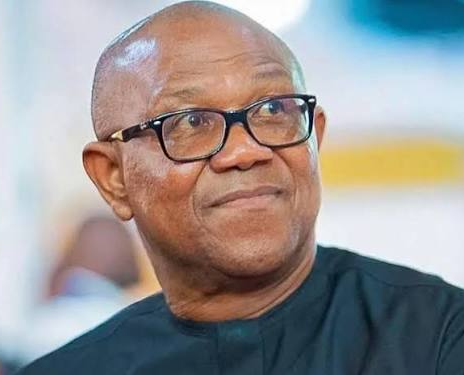
A fresh political storm has broken out over how Peter Obi’s eight-year stint as Anambra State governor ended financially and the fight is now spilling directly into his 2027 presidential bid.
The Presidency has publicly dared the Labour Party-turned-NDC candidate to make good on an old promise: quit the race if it can be shown he left Anambra owing money. The challenge follows new figures from the Anambra State Government listing eight external loans it says trace back to Obi’s tenure, with a combined outstanding balance of $92.35 million roughly ₦127.37 billion as of the end of June.
Obi governed Anambra from 2006 to 2014 and has long insisted he handed over a clean financial slate: no unpaid salaries, no pension arrears, no outstanding contractor bills, and more than ₦35 billion in inherited debt cleared during his time in office. He has also claimed he left behind over ₦75 billion in savings and investments for his successor, Willie Obiano, along with a ring-fenced ₦2.13 billion earmarked for erosion control.
What the Loans Were For
According to Anambra’s Commissioner for Information and Value Reorientation, Law Mefor, the eight facilities were originally worth a combined $123.77 million, with $92.35 million still outstanding as of June 30, 2026, about ₦127.37 billion at the official exchange rate.
The money was tied to development programmes spanning malaria control, agriculture, healthcare, education, erosion management and community projects including the State Education Programme Investment Project (SEPIP) and the Nigeria Erosion and Watershed Management Project (NEWMAP), the two largest, with outstanding balances around $37.34 million and $34.86 million respectively.
Mefor didn’t argue that borrowing itself was the problem. “Debt, especially for bankable projects and human capital development, is justifiable,” he said, adding that no government can realistically function without loans. His argument instead is that Obi’s claim of leaving no financial liabilities doesn’t square with the debt records now on the table.
That said, several of the facilities were multilateral development loans rather than ordinary commercial borrowing, disbursed over years rather than in a single tranche which complicates any simple attribution to one administration. World Bank documentation shows SEPIP, for instance, was a results-based programme spanning Anambra, Bauchi and Ekiti states, tied to education-sector performance benchmarks rather than a lump-sum drawdown.
Analyst Mayowa Balogun has pointed out that some of the facilities including the Community and Social Development Project and the Value Chain Development Project appear to have seen disbursements after Obi left office in 2014, raising questions about how much of the debt can fairly be pinned on his tenure versus successive governments.
The Disputed ₦2.13 Billion
One claim is now down to specifics rather than broad argument. Obi has said the ₦2.13 billion set aside for the Oko/Umuchiana erosion crisis arrived about three months before he left office and sat untouched in a First Bank account, reserved solely for that project.
Mefor disputes this directly, saying the account Obi identified with the number 2018779464 was not an ecological fund account at all but the state’s Internally Generated Revenue Consolidated Revenue Account. “We have obtained a certified printout of the account from inception to date,” he said, adding that no such inflow or balance had appeared in the account since it opened in 2011.
Because this claim hinges on a specific account and paper trail rather than broader debt attribution, it’s likely to be the most scrutinised piece of the dispute going forward.
Salaries, Pensions and Unfinished Business
The Soludo administration also disputes Obi’s claim that all wage-related obligations were settled before handover. Mefor said his government has cleared roughly ₦22 billion in inherited gratuity arrears for retired state and local government workers and teachers but that some legacy debts remain, particularly for former Anambra State Water Corporation staff, whose unresolved arrears persisted through Obi’s tenure and are now being settled in instalments, two of three so far paid.
The state also alleges Obi’s administration certified 16 months of unpaid salary arrears for primary school teachers but only settled five of them, leaving 11 months outstanding. A committee led by the Head of Service has reportedly been set up to re-verify the figures.
An Old Fight Resurfaces
This isn’t the first time Obi’s financial handover has been disputed. The ₦75 billion he says he left in savings and investments for Obiano has been argued over since 2014, with past fact-checks including one by the ICIR noting that Debt Management Office records showed Anambra carried about $30.32 million in external debt and roughly ₦3.03 billion in domestic debt as of December 2013. That same review found the ₦75 billion figure was never simply idle cash in the treasury and remains contested to this day.
The current clash essentially revives that old argument in a new form: whether assets and liabilities should be weighed together when judging what Obi left behind.
Obi’s Camp Pushes Back
Obi’s media team has rejected what it calls selective scrutiny. In a statement, spokesman Idris Zekeri Jnr. argued that Obi faces disproportionate examination compared to other candidates. “Every word of Peter Obi is dissected… even when disputed or needing context,” the statement said, while insisting Obi welcomes scrutiny so long as it’s applied equally to every presidential contender.
The camp also brushed off calls for Obi to respond through political surrogates, saying he would not be drawn into “endless exchanges with political proxies” and would instead stay focused on his campaign.
Discover more from CLARITYNEWSNG
Subscribe to get the latest posts sent to your email.