
By: Ganiyu Olayinka
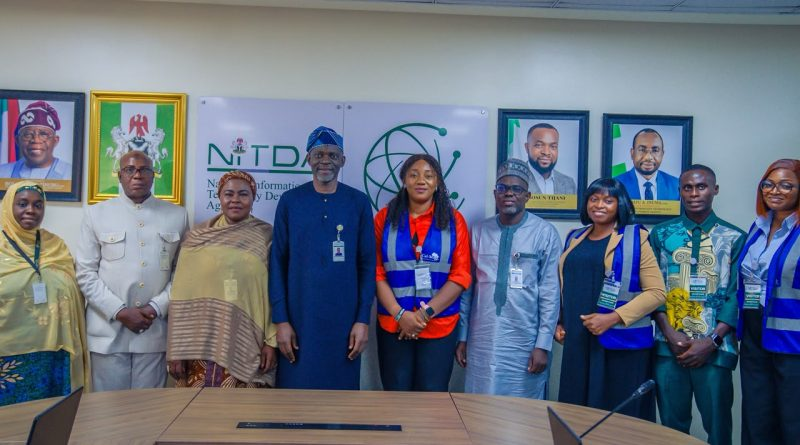
The National Information Technology Development Agency (NITDA) says it is working on plans to train community-based digital instructors, part of a broader push to keep digital literacy programmes running and extend tech access to underserved communities across Nigeria.
NITDA Director-General Kashifu Inuwa shared the plans during a courtesy visit from Cal-Maji Foundation Executive Director Faith Ayuba to the agency’s Abuja headquarters. Speaking through Director of Digital Development Services Oluwunmi Oladejo, Inuwa said the initiative was designed to give communities greater ownership of digital literacy efforts and help NITDA’s grassroots interventions last beyond their initial rollout. He asked the foundation to follow up with a formal request, backed by evidence of the work happening at its Knowledge Access Centre, so the agency could explore deeper collaboration.
Inuwa reaffirmed NITDA’s commitment to partnering with community organisations to close Nigeria’s digital divide, framing it as part of a wider effort to make sure no one is left out of the country’s digital transformation. Reflecting on the agency’s past interventions, he noted the satisfaction in hearing that programmes launched years earlier were still opening doors for people today.
He explained that NITDA keeps tabs on its intervention centres nationwide and is increasingly turning to emerging technologies to strengthen digital learning and virtual skills training. The agency’s National Digital Literacy Framework, he added, was built to give children, students, artisans, farmers, professionals, and other groups the skills they need to take part in the digital economy. Still, Inuwa flagged the cost of keeping intervention centres connected to the internet as a persistent challenge, one that will require creative funding approaches and new partnerships to overcome.
For her part, Ayuba commended NITDA for backing initiatives with a track record of measurable results, pointing to the foundation’s Knowledge Access Centre in a border community in Kogi State as an example of what’s possible. She said the facility had opened up digital education to young people who previously had no access to computers or the internet, with the foundation’s broader education programmes reaching more than 1,000 children so far.
Ayuba used the visit to push for more support, asking NITDA to help upgrade the centre’s computer systems, train local instructors, and widen access to digital capacity-building programmes. Rural communities, she argued, cannot afford to be left behind as Nigeria moves further into emerging fields like artificial intelligence and cybersecurity.
Discover more from CLARITYNEWSNG
Subscribe to get the latest posts sent to your email.