By: Tunji Okunlola
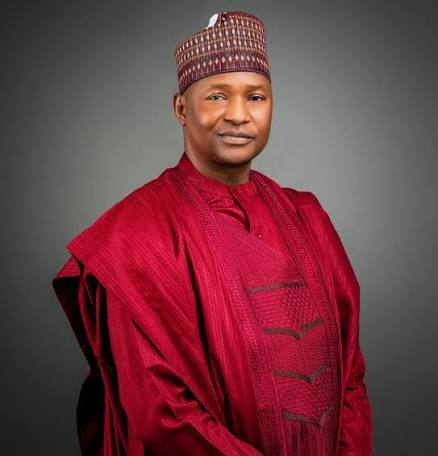
Former Attorney-General of the Federation, Abubakar Malami, SAN, has welcomed Nigeria’s win in the arbitration dispute over the Mambilla Hydroelectric Power Project, while rejecting claims that he was involved in a corrupt deal with Sunrise Power promoter Leno Adesanya.
Malami’s response came in a statement issued Tuesday by his media aide, Mohammed Doka, after the International Chamber of Commerce arbitration tribunal threw out claims brought by Sunrise Power and Transmission Company Limited against Nigeria.
In a 616-page final award issued in Paris on September 16, 2026, the tribunal dismissed Sunrise Power’s claims over the Mambilla project and directed the company and Adesanya to cover a substantial share of Nigeria’s legal costs.
Reports on the ruling, however, indicated that the tribunal made unfavourable findings about how Malami handled a settlement agreement with Sunrise, including an alleged corrupt arrangement between him and Adesanya.
Responding, Malami argued that the case was a commercial arbitration matter, not a criminal trial, and said the tribunal’s award should not be read as a criminal conviction against him.
“The proceedings were commercial arbitration proceedings between parties to a dispute. They were not a criminal prosecution of Abubakar Malami, SAN, and the award does not constitute a criminal conviction of him,” he said.
He nonetheless conceded that the reported findings were serious and said they ought to be weighed against the full body of documentary and evidentiary material.
Malami also gave background on the dispute, noting that the Sunrise-Mambilla controversy began well before he became Attorney-General. He said Sunrise first got involved in the proposed project in 2003, and that several administrations and Attorneys-General had since handled contractual disputes involving the firm.
According to him, former Attorney-General Michael Aondoakaa reviewed the matter before Malami’s own tenure and recommended a negotiated settlement, which led to a General Project Execution Agreement between the Federal Government, Sunrise and Sinohydro in November 2012.
Malami insisted he neither started the dispute nor brought Sunrise into the Mambilla project, saying he inherited a dispute that had already moved through multiple administrations, ministries and agreements. He said his own involvement stemmed from official government processes, including an April 2016 directive from the then Chief of Staff to President Muhammadu Buhari on resolving the matter.
He explained that the Justice Ministry’s function was chiefly to advise the government on its legal exposure and on possible ways of settling the dispute. By 2019, he said, the unresolved matter had become a barrier to financing talks for the Mambilla project, including discussions with China Exim Bank.
Malami said Sunrise initially demanded $500m as a full and final settlement during London negotiations in November 2019. Federal Government representatives countered with $100m before a $200m figure was later put on the table.
He said the government was weighing whether a possible multibillion-dollar liability, continuing litigation, stalled financing and project delays could be resolved through a much smaller negotiated payment but stressed that former President Buhari never approved the $200m figure.
According to Malami, Buhari indicated on April 20, 2020, that the government did not have the $200m needed to pay Sunrise, a decision relayed to the company two days later. A further request for presidential approval in January 2021 was also turned down, with Buhari reportedly writing, “Not approved.”
Malami said his subsequent conduct should also be taken into account, noting that he instructed Federal Government lawyers to resist Sunrise’s attempts to enforce the settlement once the President declined to approve payment.
On the tribunal’s reported finding of a corrupt arrangement between him and Adesanya, Malami firmly denied the allegation, saying there was no basis for suggesting his official conduct was influenced by personal financial gain. His statement said the claim should be judged against the full evidentiary record, including whether he received money or any other benefit from Sunrise, Adesanya or any related party.
He also referenced reports that Adesanya claimed to possess audio or video recordings supporting his allegations but never submitted them to the tribunal, arguing that the existence, authenticity and content of any such recordings carry evidentiary weight.
Reported findings from the tribunal, however, stated that it found evidence of a corrupt arrangement involving Malami and Adesanya, with media reports citing communications between the two as part of the evidence reviewed.
Despite the controversy over Malami’s role, Nigeria came away with a favourable result overall. The Federal Government had said Sunrise was seeking $680m plus interest in one arbitration case and more than $2.7bn in a separate dispute tied to the Mambilla project.
The tribunal dismissed Sunrise’s claims, including a $400m demand linked to the settlement agreement and an alleged default payment, and ordered Sunrise and Adesanya to reimburse Nigeria’s legal costs.
President Bola Tinubu welcomed the ruling, calling it the removal of a major legal hurdle to the long-delayed Mambilla project, and commended the Federal Ministry of Justice, Nigeria’s legal team and other witnesses involved in the case.
Malami said he was glad Nigeria’s financial interests had been safeguarded, adding that the arbitration win should be celebrated even as findings about the conduct of former officials are reviewed and addressed on the basis of evidence. He said he would issue a fuller response to the tribunal’s specific findings once he had reviewed the complete award and its accompanying records.
Discover more from CLARITYNEWSNG
Subscribe to get the latest posts sent to your email.