By: Tunji Okunlola
The Ogun State Government’s signing of a $7 billion Memorandum of Understanding with global ports operator DP World for a new deep sea port has reignited a familiar question in Nigerian infrastructure politics: whose project is this, really the state’s, or the Federal Government’s? And why does the Southwest keep landing marquee port projects while similar efforts elsewhere in the country stall?
What was signed, and where?
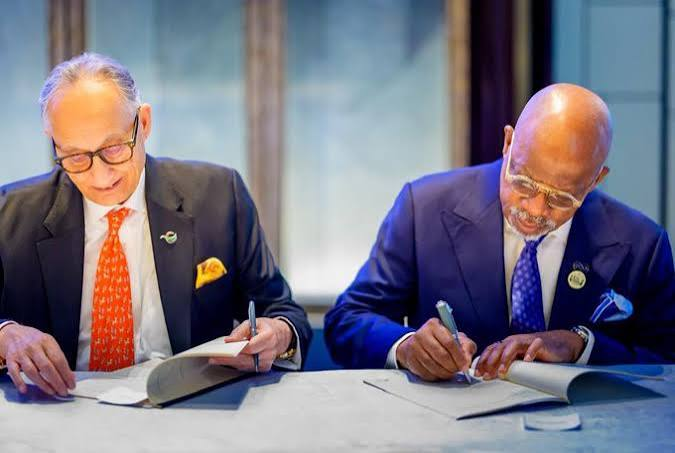
The Ogun State Government and DP World MEA FZE signed separate Memoranda of Understanding in Paris on September 24, 2026, for the development of the state-owned Gateway Deep Sea Port and the Ogun State Blue Marine Special Economic Zone. President Bola Tinubu witnessed the signing, alongside Minister of Marine and Blue Economy, Adegboyega Oyetola, and Nigerian Ports Authority Director-General, Abubakar Dantsoho.
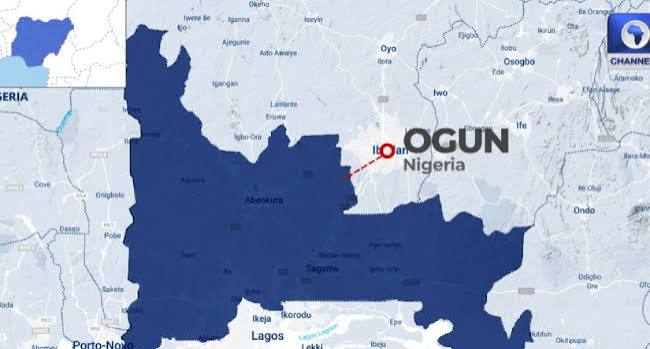
The project earlier referred to in reports as the Olokola Deep Seaport before being folded into the Blue Marine Economic Zone branding will be sited at Ogun Waterside, featuring a four-kilometre berth and an 18-metre draft designed to accommodate larger vessels, decongest the Lagos port corridor, and reduce costs and delays for importers and exporters. Combined with the accompanying 10,000-hectare Blue Marine Special Economic Zone, the agreements are projected to attract more than $7 billion in initial investment and create over 50,000 direct jobs.
Is it an FG project or an Ogun State project?
The clearest answer, based on official statements: it is a state-owned project, developed in partnership with a private operator, with the Federal Government playing an enabling rather than proprietary role.
Presidential spokesman Bayo Onanuga described the MoUs as opening the opportunity to develop the state-owned Gateway Deep Seaport and Blue Marine Special Economic Zone. This language places ownership squarely with Ogun State, not Abuja. The MoUs themselves were signed between the Ogun State Government and DP World, not between DP World and the Federal Government.
That said, the Federal Government’s fingerprints are visible throughout the arrangement. President Tinubu assured investors that the Federal Government would provide the necessary regulatory and institutional support to move the projects from agreement to implementation, and said his government would hold all parties accountable to their commitments. Federal maritime institutions; the Ministry of Marine and Blue Economy and the Nigerian Ports Authority were present at the signing, and one report noted the agreements bring together the Federal Government, Ogun State Government, DP World, financial advisers and other private-sector partners in a single investment framework.
The Federal Government’s most concrete contribution isn’t capital, it is connective infrastructure. Tinubu said the 28-kilometre Ogun section of the Lagos-Calabar Coastal Highway would link the port and industrial zone to Lagos, the Nigerian hinterland and wider African markets, and that the emerging corridor would also tie into other federal projects, including a proposed Nigerian Navy Operating Base and Dockyard and the OK LNG Project.
Governor Dapo Abiodun’s own framing supports this reading: he credited Tinubu with political leadership rather than funding, saying it had taken “the foresight, courage and dogged leadership of President Bola Ahmed Tinubu” to move a three-decade-old port vision “from aspiration to reality.”
In short: Ogun State owns and is driving the project; DP World is the private capital and operating partner; the Federal Government’s role is regulatory clearance, political backing, security infrastructure, and linking federal highway projects to the site, not direct federal ownership or funding.
Why other regions have reason to feel uneasy
The Southwest’s rapid progress on this project stands in sharp contrast to the experience of states pursuing comparable projects elsewhere and that contrast is the strongest evidentiary basis for regional disenchantment, even where explicit protest statements are harder to find on record.
The clearest comparison is Akwa Ibom’s long-stalled Ibom Deep Sea Port. Unlike the Ogun project, the Ibom port is structured, at least on paper, as a more directly federal undertaking – described as a Federal Government project driven by the Nigerian Ports Authority and Federal Ministry of Transport, in partnership with Akwa Ibom State. Yet its path has been markedly slower and more fraught. As of early 2025, one editorial noted that of the tripartite partnership between the state, the Federal Government and the private sector, “the Federal Government has been the one most infamously dragging its feet.” Governor Umo Eno visited President Tinubu in September 2024 to seek support, and later led a 104-member delegation of Akwa Ibom elites including conferring a traditional chieftaincy title on the president only for Tinubu to offer what the editorial described as vague assurances without concrete commitment. More recent reporting from 2026 suggests movement, with the state receiving a feasibility report and the president reportedly directing federal agencies to facilitate construction but even this progress has trailed far behind Ogun’s swift MoU-to-Paris-signing timeline.
Beyond Akwa Ibom, broader academic assessments of Nigeria’s port sector have used pointed language to describe the disparity. One published study on maritime shipping and seaport management in the country’s coastal regions found that ports in Calabar and Warri have been effectively abandoned, while the Onne port is dominated by foreign investors – framing the pattern as one shaped by ethno-political favouritism and regional marginalisation rather than purely commercial logic.
Taken together, the pattern is this: a Southwest-based, state-driven project moved from MoU to a $7 billion Paris signing in a matter of months, while a nominally more federally-anchored Niger Delta project has spent years navigating stalled commitments, delegations to the presidency, and shifting locations – a contrast likely to fuel a sense in other regions that federal enthusiasm and speed track geography as much as merit.
Editor’s note on sourcing: This analysis is built on public statements from the presidency, Ogun State Government, and multiple Nigerian news outlets covering the September 24, 2026 signing, cross-referenced against prior reporting on the Ibom Deep Sea Port.
Discover more from CLARITYNEWSNG
Subscribe to get the latest posts sent to your email.