
By: Ganiyu Olayinka
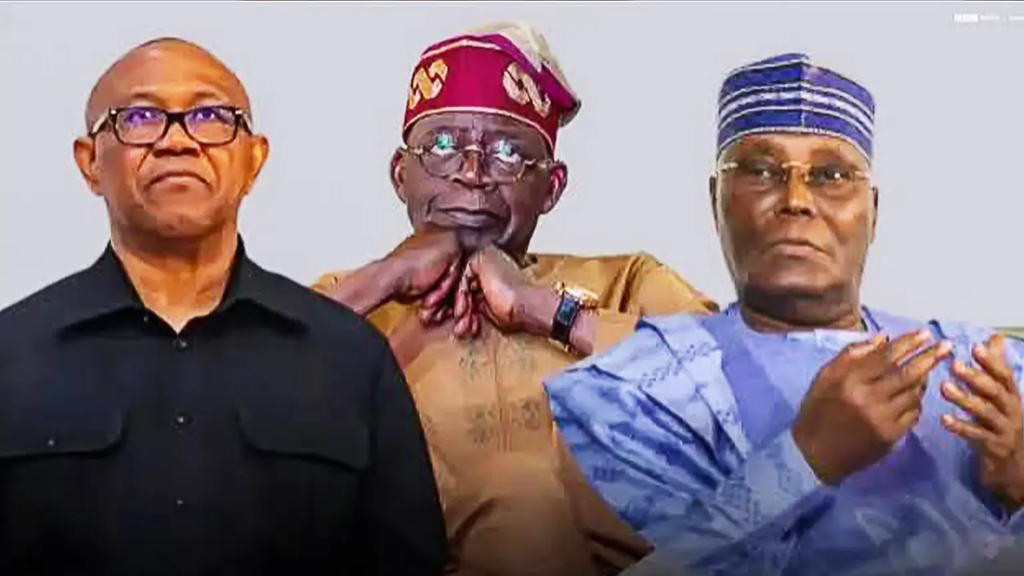
Nigeria’s opposition parties yesterday began laying the groundwork for a single presidential candidate and four-year transition programme ahead of 2027, as a faction of the African Democratic Congress (ADC) rejected the coalition and challenged Atiku Abubakar’s candidacy.
The Nafiu Bala Gombe-led faction said: “The African Democratic Congress is not and will not be in any alliance, merger, or coalition with any political party ahead of the 2027 elections.”
The faction directed Atiku to stop presenting himself as the ADC’s presidential candidate, warning that further use of the party’s name in what it described as his personal political activities would attract “legal and political consequences”.
The initiative for the unity platform was unveiled at the Summit of Nigeria’s Opposition Political Parties organised by the G100 and the Minority Caucus of the House of Representatives at the Shehu Musa Yar’Adua Centre, Abuja.
The summit attracted representatives of the African Democratic Congress, Allied Peoples Movement (APM), Nigeria Democratic Congress, Peoples Democratic Party (PDP), Democratic Leadership Alliance (DLA), Peoples Redemption Party (PRP) and Social Democratic Party (SDP).
Although the presidential candidates of the ADC and NDC, Atiku Abubakar and Peter Obi, were absent, presidential candidates of the PRP, SDP and DLA- Donald Duke, Adewole Adebayo and Moses Olusoji participated in the meeting, alongside national officers, lawmakers and other opposition figures.
Opening the summit, G100 leader and former APC National Vice Chairman, Salihu Mohammed Lukman, said the initiative was aimed at preventing a repeat of the fragmentation that characterised the 2023 presidential election.
He recalled the negotiations that produced opposition unity ahead of the 2015 election, saying the lesson was not sentimental but “arithmetical”.
Lukman argued that opposition parties must first agree on the rules and structure of cooperation before negotiating positions and personalities.
“Rules before outcomes. Table before seats,” he said, adding that what had been missing from previous opposition efforts was “not analysis” but “a table”.
He stressed that the summit was not asking any party to dissolve or abandon its identity, nor demanding the immediate withdrawal of any presidential candidate. Rather, the parties were being asked to authorise machinery for developing a credible framework for cooperation, including a Central Leadership Committee, Publicity and Communication Committee and Legal Committee.
Five working groups are expected to produce documents within four weeks for consideration at a second summit.
The documents include the National Covenant for Democratic Renewal, Single-Term Transition Charter, National Reform Programme, Framework for Opposition Unity, and Roadmap to a Common Presidential Candidate.
The proposed Transition Charter would define the mandate, duration, limitations and safeguards of a four-year transition government.
Lukman said the proposed coalition would seek to establish a Government of National Competence, anchored on competence, integrity, national inclusion and fair representation, alongside a time-bound Four-Year National Reset Programme.
“We want to underline the word ‘enforceable,” Lukman said, insisting that political agreements must be written, witnessed and backed by consequences if they are to survive changes in political interests.
He warned that unity would require sacrifice, saying, “Someone in this hall will have to accept an outcome he/she did not want. That is what unity is.”
Minority Leader of the House of Representatives, Frederick Agbedi, urged opposition leaders to put aside personal ambitions and focus on removing the current government and rescuing the country from what he described as widespread suffering.
“Nigeria is in pain. Nigeria is suffering,” he said, adding, “If we are united, what the APC did in 2015, we can repeat it.”
ADC representative Usani Usani said his party believed the coalition proposal was workable but questioned whether failure to produce a single presidential candidate would automatically amount to failure of the alliance.
“Assuming we fail to produce a single presidential candidate, have we failed?” he asked, describing the initiative as “now or never”.
APM National Chairman, Yusuf Mamman Dankadai, said: “History is being made,” urging opposition parties to look beyond individual interests. “We will stand by anything to do with Project Nigeria,” he said.
Former Niger State Governor, Babangida Aliyu, who spoke on behalf of the PDP, commended the G100 for initiating the process, saying personal and pecuniary interests had taken precedence over the national interest for too long.
PRP National Chairman, Hakeem Baba-Ahmed, also endorsed the initiative, declaring, “No party alone can defeat APC,” while describing the coalition as a sign of hope for Nigerians.
SDP National Chairman, Sadiq Umar Gombe, described the political situation as requiring an urgent national rescue effort and expressed confidence that Nigerians, particularly voters in northern Nigeria, would support a credible opposition alternative.
DLA presidential candidate, Moses Olusoji, meanwhile, said the opposition could defeat the APC by mobilising millions of eligible voters who stayed away from the 2023 presidential election, describing them as a potentially decisive “silent majority”.
The NDC National Chairman, Cleopas Moses, said his party was “part and parcel” of the initiative and described the summit as timely.
Lukman, however, cautioned that the success of the coalition would depend less on declarations of unity than on the quality of the political architecture created to sustain it, stressing that neither the G100 nor the Minority Caucus was promoting any particular presidential candidate.
“Our only interest is the one stated in the Doctrine we published on August 2 that a democracy is sustained not merely by holding elections, but by the credible possibility of an alternative government,” Lukman said.
He warned that failure to build a workable coalition could see the opposition return to the same calculations after the 2027 election, ending with an appeal: “The table is here. The chairs are here. Let us build properly.”