By: Tunji Okunlola
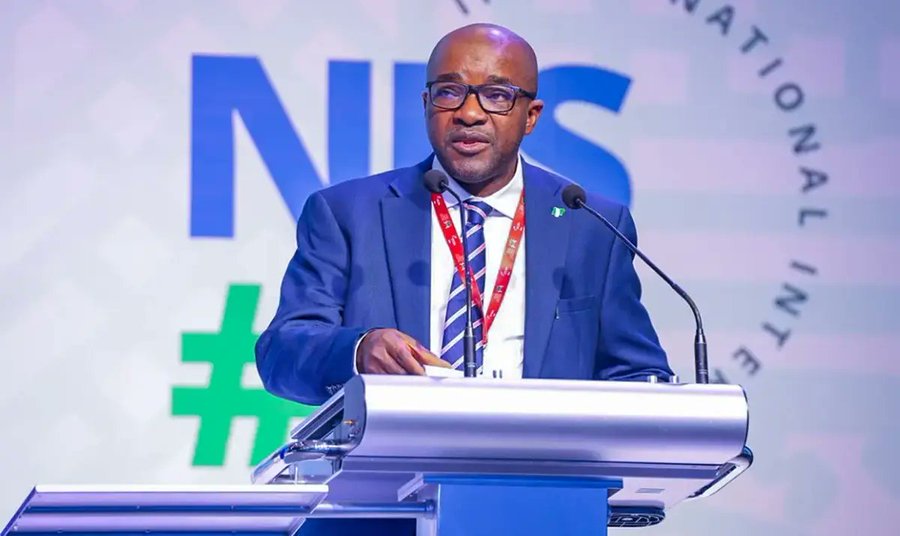
APC National Chairman, Dr Ajibola Yilwatda, has described President Bola Tinubu’s ambition to grow Nigeria’s economy to $1 trillion as more than a statistical goalframing it instead as a broader national mission to boost local production and exports, draw in investment, generate employment, and give young Nigerians a stronger foothold in the country’s economic future.
He credited the current signs of economic stability to tough reforms carried out since the administration took office on May 29, 2023, notably the end of the fuel subsidy regime and an overhaul of the foreign exchange market. These steps, he argued, were unavoidable given the state of the economy the administration inherited as one marked by subsidy-driven distortions, a fragmented multiple exchange-rate system, weak revenue collection, dollar shortages, mounting debt-servicing costs, and long-standing underinvestment in infrastructure.
On infrastructure, Yilwatda laid out a broad plan for an integrated maritime and logistics network anchored by five planned deep-sea ports in Lagos, Ondo, Akwa Ibom, Port Harcourt and Calabar. He said these ports would be linked by rail and road networks, with the Lagos-Calabar Coastal Super Highway forming the main coastal route.
According to Yilwatda, a Western Corridor would join the ports to the interior via the Lagos-Abuja-Kaduna-Kano rail line and a proposed Sokoto-Badagry Super Highway, while an Eastern Corridor would connect eastern ports through the Port Harcourt-Abuja-Kaduna-Kano rail line and a planned Calabar-Maiduguri Trans-Sahara Super Highway. The broader goal, he said, is to link Nigeria’s ports to major cities, production hubs, and even landlocked economies across the Sahel and Central Africa thereby positioning the country as a regional logistics and maritime hub.
He suggested this infrastructure push would spur investment across logistics, warehousing, freight, customs, banking, insurance, manufacturing, distribution and agro-processing, while creating jobs and foreign exchange earnings, and called for industrial parks, export-processing zones, and agro-processing clusters to be built along these transport routes. He added that Nigeria’s maritime ambitions should stretch beyond the ports themselves to shipping, ship repair, marine finance and insurance, fisheries, offshore energy, coastal tourism and marine technology.
On energy, he pointed to the Ajaokuta-Kaduna-Kano gas pipeline as a key link between Nigeria’s gas reserves and major population and industrial centres in the north, saying it would support power generation, fertiliser output, manufacturing and industrial growth.
Yilwatda also pointed to the administration’s investment in youth development citing the Nigeria Education Loan Fund (NELFUND), vocational and technical training, digital-skills programmes, and the Credit Access for Nigerians’ Domestic Investment (CREDICORP) initiative as efforts to widen access to education, skills and credit, which he described as central to building the workforce needed for a $1 trillion economy.
He argued that the next stage of the Renewed Hope Agenda needs to go beyond macroeconomic figures and deliver tangible improvements in ordinary Nigerians’ daily lives, noting that GDP growth or reserve figures alone don’t translate into food on a family’s table, school fees paid, or money in the pocket of a market woman. He said the government must convert economic stability into more food, more jobs, lower inflation, cheaper credit, steady power supply, expanded manufacturing, higher exports and stronger purchasing power for citizens.
Looking ahead to the 2027 elections, Yilwatda said Nigerians will face competing pitches, including calls to roll back some of the administration’s reforms. He urged citizens to weigh whether the country should slow down or push forward on infrastructure, whether it should discourage investors or work to become one of Africa’s top investment destinations, and whether its ports should serve only domestic trade or grow into a gateway for the wider African hinterland. He said the APC’s position was firmly in favour of progress, investment and continued backing for Tinubu.
He described the administration’s broader objective as turning Nigeria from a large domestic market into a maritime, industrial, digital and logistics hub for the continent, and said the groundwork had now been laid to move the economy from reform toward growth and, ultimately, toward the $1 trillion target by 2030.
Discover more from CLARITYNEWSNG
Subscribe to get the latest posts sent to your email.