
By: Tunji Okunlola
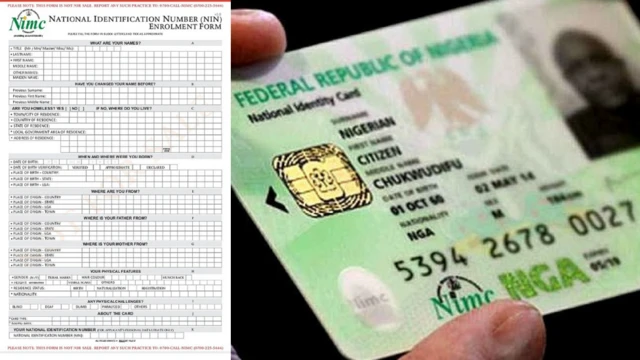
President Bola Tinubu has directed the National Identity Management Commission (NIMC) to enrol every Nigerian into the national identity database before the end of 2026, the commission’s Director-General and Chief Executive Officer, Abisoye Coker-Odusote, has said.
Coker-Odusote disclosed this on Channels Television’s Sunday Politics, describing the directive as part of the Federal Government’s push to build a comprehensive national identity system that would improve governance, planning and service delivery.
“The President has given us till the end of this year to make sure that we capture every single Nigerian,” she said.
She said NIMC is working with partners under the World Bank-supported Identification for Development (ID4D) project to accelerate enrolment nationwide, noting that the commission had brought in front-end partners from the digital identity ecosystem, private citizens are engaged and given jobs to enrol people on NIMC’s behalf.
According to the NIMC boss, the National Identification Number (NIN) serves as a unique identifier that ensures each person is registered only once, which is the reason for its name.
Coker-Odusote said the exercise would also help Nigeria determine its actual population figure, noting that current estimates range between 200 million and 250 million. She said some estimates put the figure at around 230 million, while others suggest 250 million, and that the true number would only be known once enrolment is complete.
“Your identity is basically the foundation for effective governance and service delivery. How can you plan if you don’t know the total number of persons that you have? We have been mandated by Mr President to go down to the community levels to enrol every single Nigerian,” she said.
Multiple registrations
Addressing concerns about multiple registrations, Coker-Odusote said NIMC’s biometric verification system prevents individuals from holding more than one identity. She explained that the commission’s previous system could only flag duplicate enrolments after records had already been submitted, whereas the current system detects and invalidates duplicates through biometric checks at the point of capture.
“The legacy system had no way of verifying at the front end whether you had already been captured. Once the record comes into the system, it flags it as a duplicate or that the person already exists in the database. You would only have one identity generated for you. The other record goes into a deduplication bucket where it is invalidated,” she said.
She added that biometric verification including fingerprints and facial recognition makes it difficult for anyone to maintain multiple identities, noting that the new NIMC Act has strengthened the commission’s role as the sole capturer of biometric data. Under the law, private and public sector organisations will no longer capture biometrics independently but will instead validate identities through API integration with NIMC.
“The telcos are already doing that with us. If you need a SIM card, they capture your facial biometrics, which are matched against our database in real time to confirm that you are who you claim to be. We’re using biometric validation to tighten security around identity confirmation,” she said.
The development comes weeks after President Tinubu signed the National Identity Management Commission (NIMC) Act 2026 into law on June 26, repealing the 2007 legislation. The new law reinforces the “One Person, One Identity” policy by establishing the National Identification Number as the country’s foundational identity credential for accessing government and essential private sector services, including banking, passport applications, tax administration, pensions, land transactions and consumer credit.
Tags: #President Bola Ahmed Tinubu #NIMC #ID4D
Discover more from CLARITYNEWSNG
Subscribe to get the latest posts sent to your email.