
Former President Olusegun Obasanjo has criticised President Bola Tinubu’s economic reforms, arguing that the sharp depreciation of the naira has impoverished Nigerians and worsened the country’s poverty crisis
By: Tunji Okunlola
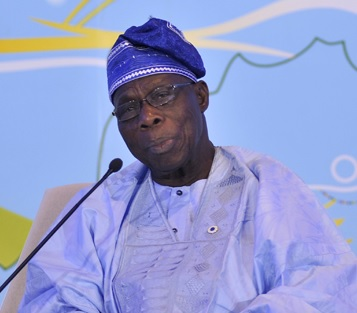
Obasanjo spoke on Wednesday, October 21, at the Financial Times Africa Summit in London, where he questioned the impact of the reforms on ordinary Nigerians.
He said the naira had fallen from about ₦500 to ₦1,500 per dollar, arguing that the currency’s depreciation had significantly reduced Nigerians’ purchasing power.
“You cannot say to me that that is good for Nigeria. You cannot say to me that that is good for us in any sense,” Obasanjo said.
However, the figures he cited require clarification. The increase in the naira cost of a dollar from ₦500 to ₦1,500 amounts to a 200 per cent increase, rather than 300 per cent. The calculation also does not establish the full extent of the naira’s depreciation since Tinubu assumed office, as the exchange rate used as the starting point affects the comparison.
How Tinubu’s reforms affected the economy
Tinubu introduced two major economic changes in 2023.
In May, he announced the removal of the petrol subsidy, which contributed to higher fuel and transportation costs. In June, his administration introduced foreign exchange reforms intended to allow the naira to trade more freely and reduce distortions associated with multiple exchange rates.
The government said the measures were designed to improve market efficiency, attract foreign investment and strengthen the economy.
However, the reforms coincided with a sharp depreciation of the naira, rising inflation and higher costs for imported goods. Increased food, fuel and transportation expenses placed additional pressure on households and businesses.
The resulting cost-of-living crisis has remained a central issue in the debate over the reforms, with critics questioning whether their long-term benefits justify the immediate economic hardship.
Inflation falls, but food costs remain high
Recent economic indicators suggest that some aspects of Nigeria’s macroeconomic performance have improved.
Data from the National Bureau of Statistics showed that headline inflation declined to 14.63 per cent in September 2026, from 15.39 per cent in August.
However, food inflation stood at 19.59 per cent year-on-year in September, highlighting the continuing pressure on household budgets.
The distinction is important. A decline in the inflation rate means prices are increasing more slowly overall. It does not necessarily mean that food, transport and other essential goods have become cheaper.
For households whose incomes have struggled to keep pace with rising living costs, slower inflation may therefore provide limited immediate relief.
Government points to economic recovery
The Tinubu administration has defended its reforms, pointing to improvements in economic growth, foreign reserves and other indicators.
Nigeria’s economy grew by 4.43 per cent year-on-year in the second quarter of 2026, compared with 4.23 per cent in the corresponding period of 2025, according to figures released by the National Bureau of Statistics.
The Central Bank of Nigeria also reported that foreign exchange reserves had risen to $55.25 billion, while the country’s current account surplus increased to $7.54 billion in the second quarter of 2026. The bank attributed the stronger external position partly to improved foreign exchange conditions and diaspora remittances.
These developments provide evidence of improvement in some areas of the economy. However, they do not independently establish whether household poverty has fallen or whether the gains have translated into higher real incomes.
The International Monetary Fund, in its June 2026 assessment of Nigeria, acknowledged that reforms had improved macroeconomic outcomes and strengthened economic resilience. It also reported that poverty had reached 63 per cent under the national poverty line and estimated that 27 million Nigerians faced food insecurity in autumn 2025.
The IMF assessment therefore highlights the difference between improvements in economic indicators and the living conditions of the population.
The debate over the cost of reform
Supporters of Tinubu’s policies argue that the reforms addressed longstanding distortions in the foreign exchange market and the fiscal burden of petrol subsidies. They maintain that allowing market forces to play a greater role in determining the naira’s value can improve transparency and encourage investment.
Critics, however, argue that the immediate costs have fallen heavily on ordinary Nigerians through higher living expenses and reduced purchasing power.
The two positions address different aspects of the same economic transition. Improvements in foreign reserves, output and inflation can indicate greater macroeconomic stability, while households may continue to struggle with the accumulated effects of earlier price increases.
The central question is whether the economic gains can translate into better living standards through higher real incomes, employment opportunities, more affordable essential goods and effective social protection.
For now, the available figures show improvements in some economic indicators alongside continuing pressure on household budgets.
Obasanjo’s criticism has brought that tension back into focus. While his claim of a 300 per cent currency devaluation requires mathematical clarification, the broader question of how Tinubu’s reforms have affected Nigerians’ living standards remains central to the assessment of the government’s economic policies.
Discover more from CLARITYNEWSNG
Subscribe to get the latest posts sent to your email.