
By: Ganiyu Olayinka
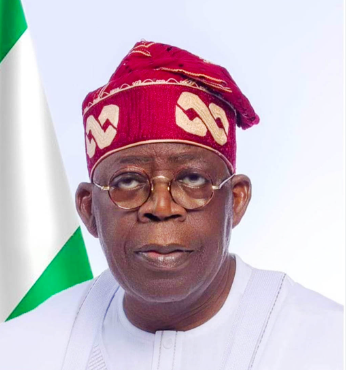
The contest for Nigeria’s 2027 presidential election is taking shape as a multi-front battle over regional loyalty, economic frustration and coalition-building, with emerging opposition alliances beginning to seriously test President Bola Ahmed Tinubu’s dominance across the country’s key voting blocs.
From the South-West, where Oyo State Governor Seyi Makinde has entered the race as a potential Yoruba alternative to the incumbent, to the South-East, where the Peter Obi-Rabiu Kwankwaso alliance is igniting fresh political energy on the platform of the Nigerian Democratic Congress (NDC), Nigeria’s electoral map is shifting in ways not seen in recent cycles. Meanwhile, a possible Atiku Abubakar-Rotimi Amaechi ticket on the African Democratic Congress (ADC) platform is generating debate, though analysts remain sceptical of its reach.
Of the 22 political parties that have submitted membership registers to the Independent National Electoral Commission (INEC), a precondition for candidate nomination under the 2026 Electoral Act, only about 30 per cent appear to be mounting competitive presidential bids. These include the ADC, Allied Peoples Movement (APM), NDC and Social Democratic Party (SDP). The SDP was the first to formally submit a presidential candidate’s name, fielding Adewole Adebayo, while the NDC has effectively zoned its presidential ticket to the South, brightening Obi’s prospects.
Makinde’s entry fractures South-West calculus
Governor Makinde announced his presidential bid last Friday on the APM platform, a move rooted in a political accord with his faction of the divided Peoples Democratic Party (PDP). His entry is widely seen as the most consequential development in the South-West’s pre-election politics, raising the prospect of a direct clash between two of the region’s dominant Yoruba political figures.
The South-West has been an APC stronghold since 1999, and Tinubu won four of its six states in 2023, namely Oyo, Ogun, Ondo and Ekiti, accumulating approximately 2.28 million votes across the region, compared to Atiku Abubakar’s 941,000 and Peter Obi’s 849,000. Yet the 2023 results also exposed fault lines. Obi defeated Tinubu in Lagos, the president’s political base, by 582,454 votes to 572,606, while Atiku won Osun State with 354,366 votes against Tinubu’s 343,945.
Those results suggest that South-West voters are no longer monolithic, increasingly influenced by economic conditions and individual candidate appeal rather than ethnic solidarity. Makinde’s candidacy could deepen that trend, particularly among urban youth, professionals and middle-class voters hit hardest by the removal of fuel subsidies and the floating of the naira.
A core Makinde loyalist, Alhaji Bisi Olopoeyan, put it plainly: “For the first time in many years, there is another influential Yoruba politician with a national outlook confronting Tinubu politically from within the South-West. That changes the equation completely.”
Still, Makinde faces significant obstacles. He has yet to build a credible political structure in the North, where presidential elections are often decided, and Tinubu retains the advantages of incumbency and a deeply entrenched national network. There is also the question of whether Makinde’s presidential run is primarily aimed at sustaining his principled stance on power rotation and supporting the emergence of a preferred successor in the Oyo governorship race, rather than mounting a full-scale national campaign.
The outcome of the Osun governorship election on 8 August adds another layer of risk for the president. Should Governor Ademola Adeleke retain power, Tinubu’s electoral prospects in both Oyo and Osun could face further setbacks in 2027, according to observers. As political commentator Eddy Olafeso noted: “Multiple opposition groups are expected to join the PDP-APM train, which could further strengthen the forces against the APC.”
Atiku-Amaechi: A ticket in search of a base
Former Vice President Atiku Abubakar, former Transport Minister Rotimi Amaechi and Mohammed Hayatu-Deen have all purchased and returned ADC presidential nomination forms, with a straw poll expected shortly. Barring an upset, analysts expect Atiku to secure the ticket for what could be his final presidential run, with Amaechi potentially taking the vice-presidential slot.
The alliance presents a North-East/South-South configuration, combining Atiku’s influence in the North-East with Amaechi’s political networks in Rivers State and parts of the Niger Delta. Yet analysts are unconvinced it can significantly alter the electoral map. Amaechi’s grip on Rivers State has weakened since his time as governor, and the ADC’s own credibility took a blow when Obi and Kwankwaso departed for the NDC.
Political analyst Prof. Christian Onyegbule of Imo State University was blunt in his assessment: “The recent denial by the South-South caucus of the ADC of the purported endorsement of Amaechi clearly shows that he has no strong base in the zone. The ADC lost its relevance when Obi-Kwankwaso decamped to the NDC. The battle is between Tinubu and the Obi-Kwankwaso movement.”
Rights activist and political analyst Josiah Egbilika agreed, arguing that the ticket’s best hope lay in aligning with the NDC rather than running independently. “Their alignment with the NDC will improve the opposition’s chances of sweeping the South-South and North-East. Anything short of that may have little or no effect given the current political shift,” he said.
The ticket also faces a broader sentiment problem: many in the South argue that backing a northern presidential candidate against a sitting southern president runs counter to the principle of rotational presidency, a position Atiku himself resisted in 2023, triggering the PDP crisis that partly fuelled Makinde’s current ambitions.
Obi-Kwankwaso: South-East momentum builds
Perhaps the most striking political movement ahead of 2027 is the speed with which the Obi-Kwankwaso alliance has caught fire in the South-East since the pair decamped to the NDC. Buildings formerly displaying ADC colours have been rebranded in NDC colours almost overnight, and party offices have seen a surge of new registrations.
The NDC has become a rallying point for politicians who felt marginalised in their former parties, as well as for Obi’s loyal support base, the “Obidient” movement, which delivered him a victory in Lagos in 2023 despite his third-place national finish.
At a meeting convened for stakeholders in Enugu West, aspirant Ogochukwu Onyema disclosed that Obi had personally directed members to collapse their ADC structures and join the NDC, following unresolved leadership disputes and litigation within the party. “We saw many landmines and calculated attempts to frustrate politicians and create a one-party system,” Onyema said, explaining the rationale for the move.
The transition has not been without friction. Harmonising the influx of ADC defectors with existing NDC structures has proven difficult, leading to rescheduled ward, local government and state congresses in three South-East states, namely Enugu, Abia and Anambra. Some politicians who moved with Obi to the ADC have declined to follow him to the NDC, though the majority of his support base appears willing to look beyond internal disputes.
Jerry Igwekaku, an official of the Obi-Kwankwaso Movement in Anambra State, captured the mood on the ground: “This ticket remains a source of relief for suffering Nigerians. Our people love it because Kwankwaso remains a force in the North, while here in the South-East we love Obi. Their combination excites us.”
Observers now expect 2027 in the South-East to be a straight contest between the APC and the NDC. Whether the NDC can replicate the energy Obi generated on the Labour Party platform in 2023 and translate it into a broader national victory remains the central question as Nigeria’s most consequential pre-election season in years continues to unfold.
Tags: #APC #ADC #APM #PDP #Atiku Abubakar #Bola Ahmed Tinubu #Atiku-Amaechi