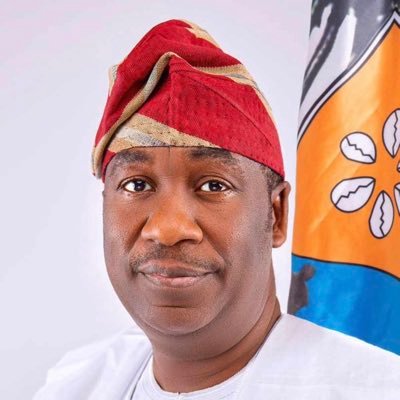
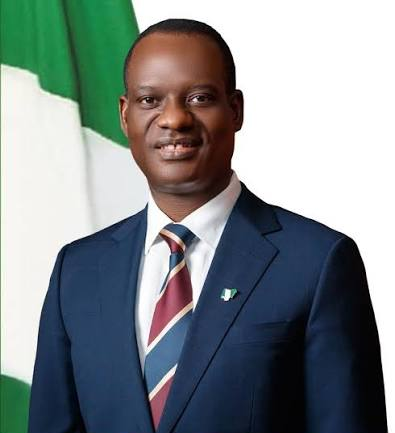
Nigeria’s Minister of Finance and Coordinating Minister of the Economy, Taiwo Oyedele, has warned that restoring petrol subsidy could trigger capital flight, weaken investor confidence and push the naira to between ₦3,000 and ₦4,000 per dollar.
By: Tunji Okunlola
The minister gave the warning during a press briefing on the sidelines of the International Monetary Fund (IMF) and World Bank Annual Meetings in Bangkok, Thailand.
However, the African Democratic Congress (ADC) Presidential Campaign Council has challenged him to publish the economic model supporting his prediction, accusing the Federal Government of using fear to discourage debate about petrol subsidy removal.
The disagreement comes amid continuing concerns about the cost of living and the economic consequences of the Tinubu administration’s decision to remove petrol subsidy in 2023.
Oyedele Warns of Capital Flight
Oyedele said investors had repeatedly questioned whether the Federal Government would maintain its economic reforms as Nigeria approaches another election cycle.
He argued that any indication that President Bola Tinubu’s administration was considering reinstating petrol subsidy could unsettle financial markets, increase borrowing costs and put additional pressure on the naira.
According to the minister, domestic and international markets have largely dismissed opposition proposals to restore subsidy as an unlikely policy direction.
He warned that even an announcement that the government was considering a return to subsidy could trigger an immediate reaction from investors.
Oyedele said such a development could prompt investors to withdraw their capital, putting pressure on the foreign exchange market.
He projected that the naira could depreciate to ₦3,000, ₦3,500 or even ₦4,000 per dollar.
The minister also warned that the consequences could extend beyond foreign investors. Wealthy Nigerians, business owners and middle-class investors might seek to protect their assets by purchasing dollars, increasing demand for foreign exchange.
He argued that a combination of capital outflows and increased domestic demand for dollars would intensify pressure on the naira.
According to Oyedele, ordinary Nigerians would bear much of the resulting economic burden through higher import costs, rising prices and increased hardship.
However, the exchange-rate figures he cited represent a projection of what could happen under a particular policy scenario, rather than a confirmed future outcome.
ADC Challenges Minister to Produce Economic Model
The ADC Presidential Campaign Council has challenged Oyedele to publish the economic model behind his prediction that restoring petrol subsidy could push the naira towards ₦4,000 per dollar.
Kola Ologbondiyan, the council’s Director of Media and Publicity, accused the government of using alarming projections to discourage public debate about the policy.
The council argued that Nigerians deserved evidence explaining how a return to subsidy would produce the specific exchange-rate outcomes cited by the minister.
The challenge raises questions about the assumptions underpinning the government’s warning, including the potential scale of capital flight, the response of domestic investors and the effect of subsidy spending on public finances.
Atiku Abubakar, the ADC’s presidential candidate, has advocated restoring petrol subsidy to ease the economic pressure on Nigerians.
The proposal contrasts with the Tinubu administration’s position that reversing its economic reforms could undermine investor confidence and place additional pressure on the economy.
NNPC’s Petrol Price Reduction Not a Return to Subsidy
Oyedele also rejected the suggestion that the Nigerian National Petroleum Company Limited’s temporary reduction in petrol retail margins amounted to a return to subsidy.
He described the measure as a commercial decision rather than a payment funded by public resources.
According to the minister, a company that reduces its profit margin to make a product more affordable is not automatically providing a subsidy.
The distinction matters because a reduction in a company’s commercial margin differs from a government-funded arrangement in which public resources are used to cover part of the cost of a product.
The financial implications depend on how the price reduction is funded, its duration and whether the government assumes any direct or indirect cost.
Background: Nigeria’s Petrol Subsidy Removal
President Bola Tinubu announced the removal of petrol subsidy during his inauguration on May 29, 2023.
The government subsequently introduced foreign exchange reforms that allowed the naira to trade more freely in the market.
The administration defended these measures as necessary to address economic distortions, reduce pressure on public finances and improve the functioning of the foreign exchange market.
However, the removal of subsidy contributed to higher petrol costs and increased pressure on household and business spending, keeping the policy at the centre of public debate.
Supporters of restoring subsidy argue that government intervention could provide relief from high fuel and transportation costs. Opponents warn that reinstatement could increase public expenditure and create additional pressure on government finances and the foreign exchange market.
The latest disagreement between Oyedele and the ADC highlights the competing priorities of maintaining economic reforms, attracting investment and reducing the cost-of-living burden on Nigerians.
Discover more from CLARITYNEWSNG
Subscribe to get the latest posts sent to your email.