By: Ganiyu Olayinka
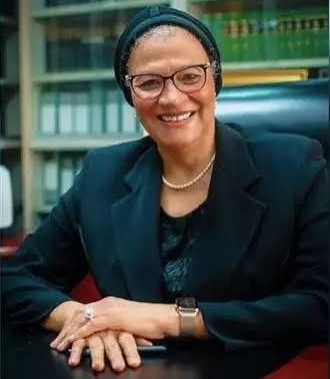
Retired Supreme Court Justice Amina Adamu Augie has warned that corruption among judges, lawyers and court officials is eroding public confidence in Nigeria’s judiciary, turning courts from institutions of impartiality into what she described as “market stalls.”
Augie spoke in Abuja on Saturday, October 17, 2026, during the 40th anniversary celebration of the Nigerian Law School Class of 1986, popularly known as the Centennial Class.
The former law school lecturer identified corruption, political interference, inadequate funding and delays in the administration of justice as major challenges confronting the judiciary. She called for strict disciplinary action against anyone found guilty of misconduct, regardless of their seniority or influence.
“The third, which I will not dress up, is corruption. Where it exists on the Bench, at the Bar, or in the Registry, it poisons everything by turning the one place that a citizen should find impartiality into one more market stall,” she said.
Augie Warns Against Erosion of Public Trust
The retired jurist cautioned against condemning the entire judiciary, noting that many judges and lawyers remained honest, hardworking and poorly remunerated.
She argued that the judicial system should protect its officers from undue pressure and temptation rather than create conditions that encourage misconduct.
Augie expressed particular concern about the conduct of some senior members of the legal profession, saying their actions had contributed to declining public confidence in lawyers.
“The public today is quick to believe the worst of lawyers, and sorry to say, not always without cause,” she said.
She added that when senior members of the profession were implicated in corrupt practices, the damage extended beyond the individuals involved to the reputation of the entire profession.
“When a few senior members of the profession have been found to traffic in the corruption of justice, the damage is not to them alone; it stains the gown we all wear,” she said.
Augie maintained that restoring public confidence would require more than public relations efforts, stressing the need for professional accountability and disciplinary measures against offenders, irrespective of their standing.
She also reminded lawyers that their responsibilities extended beyond representing paying clients to protecting the court and the administration of justice.
She urged practitioners to reject the manipulation of proceedings, distortion of evidence, deliberate delays and attempts to secure favourable judgments through improper influence.
Judicial Independence and Funding
Augie identified inadequate funding and dependence on the executive arm of government as further threats to judicial independence.
She argued that courts could not operate with complete independence when they depended on the executive for basic infrastructure, transportation and the payment of judicial entitlements.
“A Judiciary that must beg the executive for a Courtroom roof, vehicles, or even the Judges’ entitlements is not fully free; financial autonomy for the Courts is not a perk for Justices and Judges, but a guarantee for litigants,” she said.
She called for measures to strengthen financial autonomy and ensure that courts had the resources needed to dispense justice without undue external influence.
Delays and High Costs Undermine Access to Justice
The retired Supreme Court justice described delays as a chronic problem in Nigeria’s justice system, warning that prolonged proceedings and high litigation costs continued to deny many citizens timely access to justice.
Drawing on her experience at the Supreme Court, Augie said the apex court was burdened with appeals, including cases that should have been resolved by lower courts.
She recalled a case involving the burning of 12 goats that eventually reached the Supreme Court, using the example to illustrate the volume and nature of matters reaching the country’s highest court.
Augie called for constitutional amendments to restrict the categories of cases that could proceed to the Supreme Court, allowing it to concentrate on substantial constitutional, legal and national issues.
She argued that improving case management and reducing unnecessary appeals would help address delays and make the justice system more accessible.
Dasuki, El-Zakzaky Cases Highlight Past Disobedience to Court Orders
Augie also criticised past instances in which government authorities failed to comply promptly with court orders, warning that such conduct undermined judicial authority and weakened the rule of law.
She cited the prolonged detention of former National Security Adviser Sambo Dasuki and Islamic Movement in Nigeria leader Ibrahim El-Zakzaky, despite court orders concerning their release.
Both cases have since reached important milestones.
Dasuki, who had been held by the Department of State Services (DSS) since December 2015, was released on December 24, 2019, following a directive by the Federal Government to comply with court orders granting him bail.
El-Zakzaky and his wife, Zeenat, were discharged and acquitted by a Kaduna State High Court on July 28, 2021, after the court ruled that the prosecution had failed to establish a case against them on the charges before it. They were subsequently released.
The cases remain examples of earlier controversies surrounding compliance with judicial decisions, rather than instances of continuing detention.
Augie’s broader argument was that government authorities must respect judicial decisions if the rule of law is to command public confidence. When court orders are disregarded, citizens may lose faith in the ability of the judiciary to protect their rights.
Nigeria’s Rule of Law Record
Reflecting on the 40 years since the Nigerian Law School Class of 1986 graduated, Augie acknowledged progress, particularly following Nigeria’s return to democratic government in 1999.
However, she expressed disappointment that justice remained slow, expensive and inaccessible to many citizens.
She also referred to Nigeria’s position in the 2025 World Justice Project Rule of Law Index. The index ranked Nigeria 120th out of 143 countries and jurisdictions, highlighting continuing challenges in the country’s adherence to the rule of law.
Augie called for comprehensive reforms to strengthen judicial independence, improve access to justice, modernise case management, reduce delays and restore ethical standards across the legal profession.
She urged members of the Class of 1986, many of whom now occupy senior positions in the judiciary, government and the legal profession, to use their influence to defend the rule of law and rebuild public confidence.
“If Governments obey the Courts, if its Judgments are enforced, if justice comes within a reasonable time and within reach of the poor, if the profession upholds its integrity and disciplines its own, Nigeria would be better positioned to secure its future,” she said.
Discover more from CLARITYNEWSNG
Subscribe to get the latest posts sent to your email.