By: Tunji Okunlola
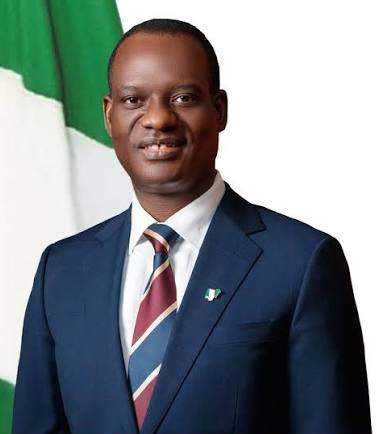
Finance Minister and Coordinating Minister of the Economy Taiwo Oyedele has said investors are already betting on a second term for President Bola Tinubu and expect his economic reforms to continue. He argued that markets and the international community have largely dismissed the opposition as unserious.
He spoke alongside Central Bank of Nigeria (CBN) governor Olayemi Cardoso at the closing press briefing of the IMF/World Bank Annual Meetings in Bangkok, Thailand. Separately, the African Democratic Congress (ADC) has asked Tinubu to explain a $12.4 billion gap, about N16.5 trillion, in Nigeria’s external accounts, which it says the World Bank identified in its October 2026 Nigeria Development Update.
“Written off the opposition”
Oyedele said investors’ expectation of continuity has shaped how they view Nigeria’s outlook, including their response to opposition proposals to bring back fuel subsidies. “The markets, including the domestic market… and the international market, have largely written off the opposition in Nigeria as being unserious. That is why they have not priced in the proposed return of subsidy,” he said.
He added that any hint that the president planned to restore the subsidy would immediately show up in market prices.
The minister said investors repeatedly asked whether the government would reverse its reforms as elections approach, both in Thailand and during two visits to London. He said the government remains committed to the reforms, which he called necessary to restore macroeconomic stability and lay the base for lasting growth. The next phase, he said, will turn that stability into stronger investment, lower financing costs and more jobs.
Numbers and warnings
Oyedele said private investment has risen twentyfold since the reforms began, from about $300 million in 2023 to $6 billion in 2026. He said net reserves have grown fifteenfold, from barely $3 billion to more than $45 billion.
He ruled out any return to fuel subsidies or multiple exchange rates, warning that this would damage investor confidence, trigger capital flight and put new pressure on the naira. “Let me be clear: there will be no return to fuel subsidies or multiple exchange rates,” he said. If capital left, he said, the naira could fall to N3,000, N3,500 or N4,000 to the dollar, with ordinary Nigerians bearing the cost.
He also defended the Nigerian National Petroleum Company Limited’s recent temporary cut in petrol retail margins, calling it a commercial decision and not a subsidy funded by public money. “If you offer a discount by reducing that profit margin, how does that become a subsidy?” he asked.
Cardoso: consistency and transparency
Cardoso said consistent, transparent policy is essential to sustaining investor confidence, and that better economic and foreign exchange stability has created conditions for long-term investment.
He said Nigeria wants closer financial cooperation with China to draw more Asian capital and improve cross-border payments, settlement and trade finance. Talks with People’s Bank of China governor Pan Gongsheng focused on practical ways to strengthen ties between financial institutions, and China’s payments infrastructure offers lessons for Nigeria. Technical discussions will follow during his upcoming visit to Beijing.
Cardoso noted that Chinese investment in Nigerian financial instruments has been limited despite China’s abundant liquidity. “This could be an opportunity to change that trajectory and generate greater interest from Asian markets in Nigerian instruments and African instruments generally,” he said. He described the effort as part of a wider push to deepen ties with Asian economies and widen the pool of capital available to Nigerian markets.
Discover more from CLARITYNEWSNG
Subscribe to get the latest posts sent to your email.