
By: Ganiyu Olayinka
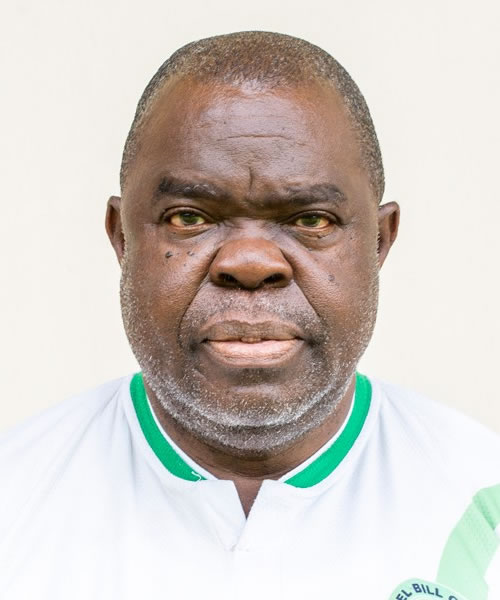
Nigeria’s deepening security crisis is placing renewed strain on the country’s policing structures. Against this backdrop, the Federal Government announced Tuesday that Professor Emmanuel Olukemi Rotimi of Obafemi Awolowo University (OAU) has been named to the Policy Advisory Committee guiding the Presidential Working Group on the National Policing Bill.
Communities across several states continue to endure disruption from bandits, kidnappers and other armed groups. President Bola Tinubu has directed the military, the Nigeria Police Force, the Department of State Services (DSS) and other security agencies to step up efforts to free those abducted in the Niger mosque attack, but concern is growing over how exposed many other communities remain.
Police spokesman Wasiu Abiodun said the attackers hit Kpenya Mosque in Dekara district, Borgu Local Government Area, at roughly 2 p.m. last Friday, after first striking the villages of Gidan-Zana and Kpenya. Borgu council chairman Abdullahi Mohammed Nasir said no fewer than 60 people were seized, with an unknown number injured by gunfire while trying to flee.
The attacks have deepened worries about residents’ ability to defend themselves. In Sokoto State, footage circulating on X, posted by an account called D English Alhaji Media, showed a man in Islamic dress described as a cleric walking with members of his congregation while carrying what looked like a pump-action shotgun. The person’s identity, the details of the incident, and where the footage was filmed have not been independently confirmed.
The video surfaced amid a fresh wave of attacks in Sokoto, where armed bandits and kidnappers have kept residents under threat. In Wurno Local Government Area, bandits struck three communities at once, killing at least five people and abducting several others. Taken together, these incidents point to a pattern of persistent violence pushing residents either to flee or to arm themselves.
The government said Rotimi’s selection reflects his long-standing research into how Nigeria’s policing system evolved, particularly its earlier experience with decentralised police forces before military rule took hold.
The bill under development is meant to establish the legal and operational basis for a two-tier policing system; a Federal Police Service alongside State Police Services covering their duties, funding, accountability and oversight.
The Presidential Working Group, led by Chief of Staff Femi Gbajabiamila, has been given seven weeks to produce a draft ready for submission to the Ministry of Justice. The Policy Advisory Committee itself, chaired by retired Justice Mohammed Abdullahi Liman, is tasked with setting policy direction, issuing drafting instructions and vetting the bill’s content.
A historian in OAU’s Department of History, Rotimi has built much of his academic career around Nigeria’s policing institutions. His master’s thesis looked at the Native Administration Police Forces of Western Nigeria between 1905 and 1951, while his doctoral work traced similar forces nationwide from 1900 to 1970. His 2001 book, The Police in a Federal State: The Nigerian Experience, chronicled the rise, structure and eventual dismantling of Native Authority and Local Government police forces.
Rotimi has argued that today’s debate over State Police should be grounded in Nigeria’s earlier experience with decentralised policing, stressing the need for transparent funding, solid training, public accountability and safeguards against political interference. Those themes are expected to surface in the bill itself, alongside questions of national standards, state readiness, inspections, complaints handling, firearms regulation, data-sharing, federal intervention powers and institutional oversight.
His appointment, OAU said in a statement congratulating him, is recognition of his scholarly contribution to national conversations on policing and security reform. The university and others expect his background to bring historical grounding to a framework meant to address current threats while avoiding the institutional flaws that undercut earlier decentralised policing efforts.
Separately, National Human Rights Commission (NHRC) Executive Secretary Anthony Ojukwu called for State Police to be established without delay, arguing that Nigeria’s centralised system is stretched too thin to protect citizens. He made the remarks during a panel at the Nigerian Bar Association’s 66th Annual General Conference in Port Harcourt.
Ojukwu argued that Nigeria’s population far outstrips its available police personnel, making fast response to threats nearly impossible: “If you don’t have State Police, you can never have adequate security. We have over 200 million people in Nigeria with far less number of policemen to police them. The response time is so long that we only live by God’s grace.”
He said decentralised policing would let officers respond more quickly because of their familiarity with local terrain and communities: “With State Police, the governors will have the wherewithal to respond quickly. The police will be more effective because they know the terrain; they know the people.”
At the same time, Ojukwu cautioned that decentralisation without proper checks could open the door to abuse, political repression, wrongful arrests, intimidation and rights violations. He urged the National Assembly to build strong accountability mechanisms, independent oversight and clear citizen protections into the bill: “We must insist that when the National Policing Bill comes, it must be well drafted. There must be a board that runs it. There must be oversight. Otherwise, it will become another problem.”
He added that effective policing should be judged not only by enforcement outcomes but by respect for human dignity, due process and the rule of law and called on lawyers to push harder for accountability and challenge unlawful conduct by security agencies.